August 7, 2026 KavesNET Team
What Is NVMe SSD? Its Impact on Server Performance (vs SATA SSD)
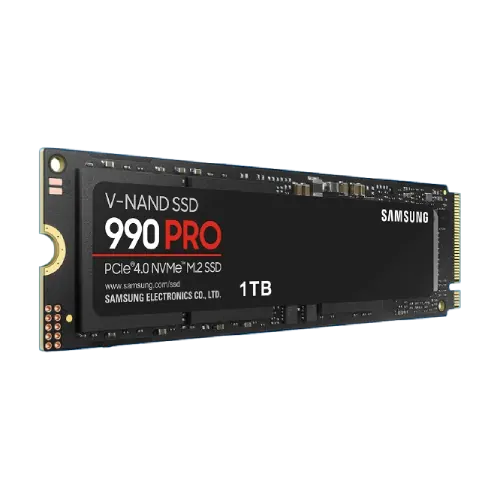
What is NVMe, and how does it differ from SATA SSD? IOPS, latency, and real-world numbers showing why NVMe is now the server standard.
Read More
See Plans
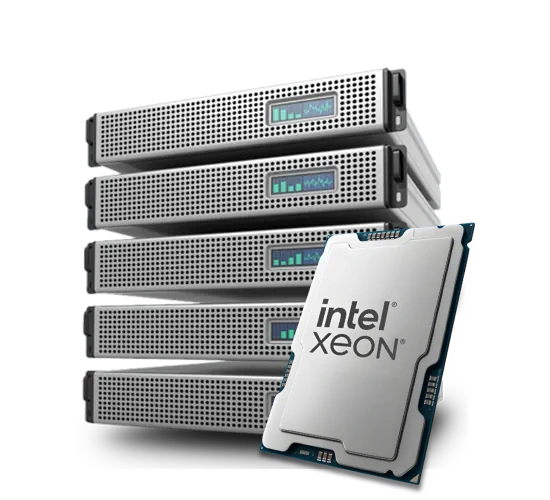
Dual socket Xeon servers deliver up to 88 threads of parallel capacity. Built for virtualisation, rendering and compute heavy workloads.
Up to 44 cores and 88 threads
Up to 512 GB DDR4 ECC
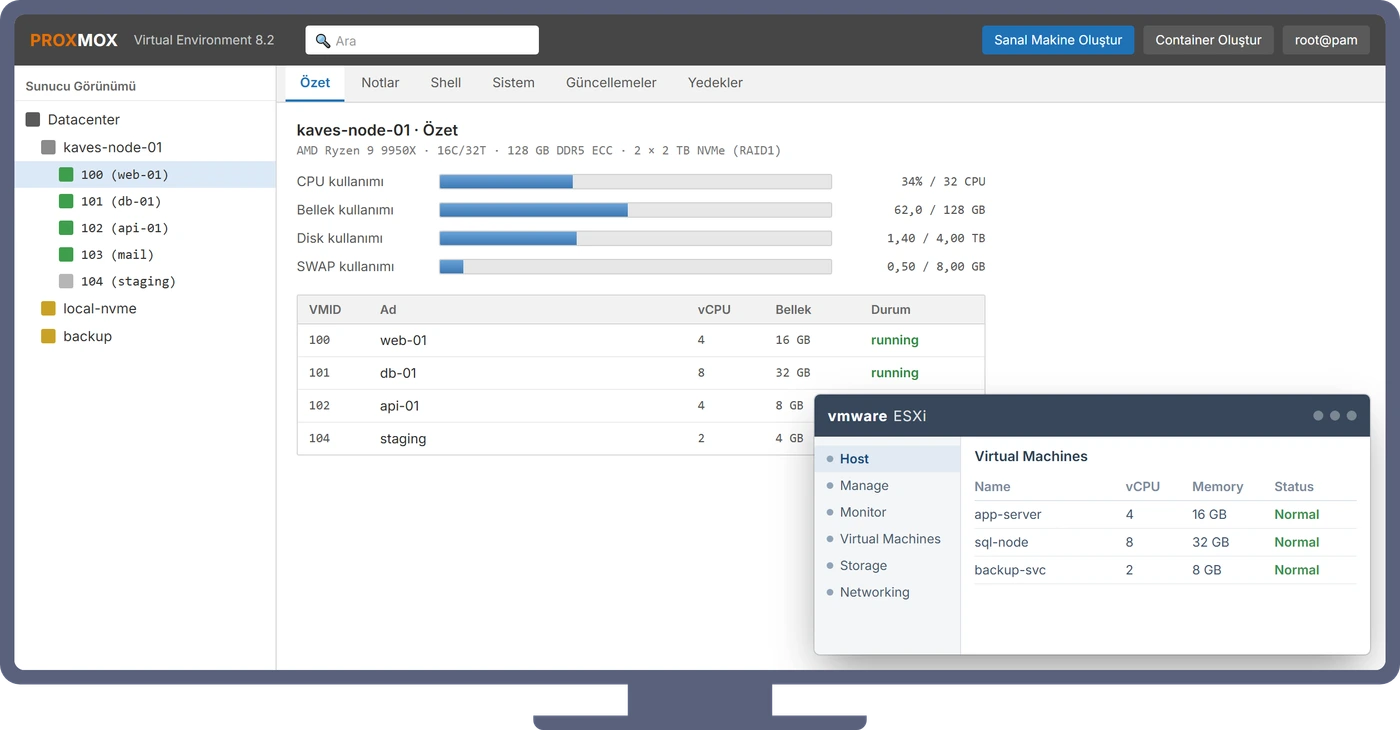
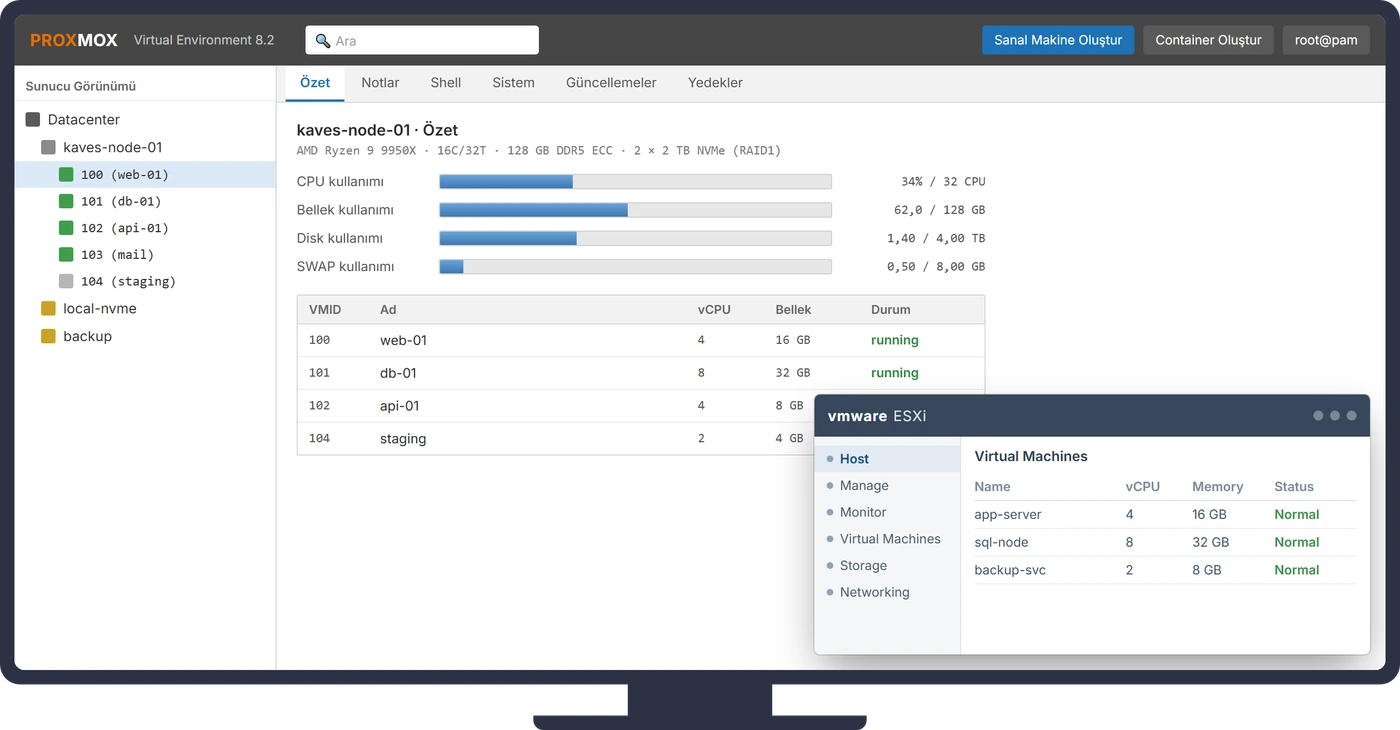
Install Proxmox or VMware
Expandable to 4 TB
Payment Period
Choose a longer term to save more
| Server | CPU | Memory | Disk | PORT/SPEED | IP Address | Price | |
|---|---|---|---|---|---|---|---|
Dedicated 9  | 2 x Intel® Xeon® E5-2680v4 28C/56T - 2.4 GHz/3.3 GHz | 128 GB (Max. 512 GB) DDR4 ECC RAM | 1 TB (Max. 4 TB) NVMe SSD | 1 Gbps Upgradeable | None | 4,000 ₺ Monthly | Place Order |
| Dedicated 10 | 2 x Intel® Xeon® E5-2690v4 28C/56T - 2.6 GHz/3.5 GHz | 128 GB (Max. 512 GB) DDR4 ECC RAM | 1 TB (Max. 4 TB) NVMe SSD | 1 Gbps Upgradeable | None | 5,000 ₺ Monthly | Place Order |
| Dedicated 11 | 2 x Intel® Xeon® E5-2699v4 44C/88T - 2.2 GHz/3.6 GHz | 128 GB (Max. 512 GB) DDR4 ECC RAM | 1 TB (Max. 4 TB) NVMe SSD | 1 Gbps Upgradeable | None | 6,000 ₺ Monthly | Place Order |
4,000 ₺
Monthly
5,000 ₺
Monthly
6,000 ₺
Monthly
Designed for many processes running at once. You can consolidate your virtual machines onto one physical server.
Support for up to 512 GB of ECC memory lets you run memory hungry applications comfortably.
The Xeon platform is built for long uninterrupted uptime, which is why it is chosen for critical workloads.
Low latency and an upgradeable connection place you closest to your local users.
Dual processors, large memory and infrastructure built for virtualisation.
Delivers up to 44 cores and 88 threads of parallel capacity. Built for many processes running at the same time.
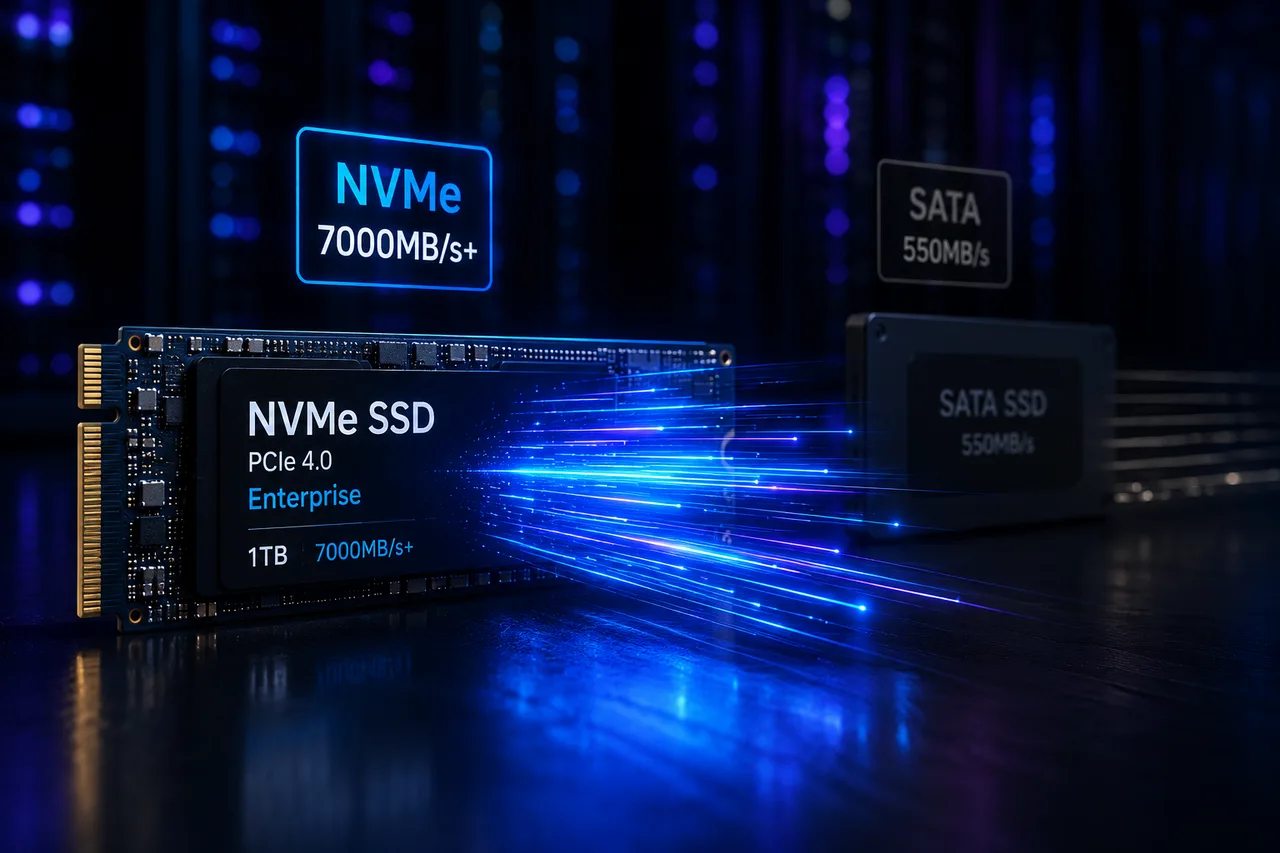
NVMe drives configurable up to 4 TB deliver high IOPS and low latency. Virtual machines never queue behind each other for disk access.
Install Proxmox VE or VMware ESXi and build your own virtual servers. The hardware is yours, so the version choice is too.
Here you can find the most frequently asked questions from our customers about our services, products, and how we operate. Along with their answers.

A server where two separate physical processors work together on one mainboard. Total core and memory capacity is significantly higher than single socket systems.
Virtualisation, container clusters, video processing, large databases and any workload that needs parallel compute.
Yes. You can install Proxmox VE or VMware ESXi and create your own virtual servers. The hardware is entirely yours.
Memory scales to 512 GB and storage to 4 TB. The network can also be upgraded to 10 Gbps.
Click the info icon next to the processor name in the plan table to open independent benchmark scores for that CPU.
Memory decides the limit, not core count. With 128 GB you can comfortably run around 14 machines at 8 GB each. Memory scales to 512 GB.
Each processor has memory close to it. Pinning a virtual machine to one processor's memory lowers latency. Proxmox and ESXi expose this setting in their interface.
Yes. Depending on disk count, RAID1 or RAID10 can be set up. Just tell us which configuration you want before installation.
This series runs at lower clock speeds than newer generations. In return, the total core and memory capacity of a dual socket build exceeds single socket systems at the same budget.
You might also like these.
What is NVMe, and how does it differ from SATA SSD? IOPS, latency, and real-world numbers showing why NVMe is now the server standard.
Read More
What is a dedicated server, how does it differ from a VDS, and when is it a must? Advantages, costs, and the co-location alternative — all in this guide.
Read More
The Intel Xeon family explained: what sets Xeon Gold apart, why ECC RAM matters, and how Xeon compares to desktop CPUs (i9, Ryzen) for server workloads.
Read More
We are with you at every step, from setup to daily operations. Reach us by phone, email or the support panel.